
When a tooth is badly decayed, cracked, or infected, patients often wonder whether it can be repaired or needs to be removed. Comparing a root canal vs. extraction can feel overwhelming, especially when you are also dealing with tooth pain, sensitivity, or swelling.
Root canal treatment and tooth extraction address different clinical situations. A root canal is intended to remove infected or inflamed tissue from inside a tooth while preserving the natural tooth structure. An extraction removes the entire tooth when it cannot be predictably restored or keeping it would not support long-term oral health.
The right recommendation depends on more than the severity of your symptoms. Your dentist must evaluate the tooth structure, roots, surrounding bone, gum health, bite, and restorability before determining whether the tooth can be saved.
Why Saving a Natural Tooth Is Often the First Consideration
When a natural tooth can be predictably restored, preserving it is generally preferred. Your natural teeth are designed to work together when you bite, chew, and speak. Keeping the tooth also avoids creating an open space that may require a bridge, dental implant, or removable appliance.
However, saving a tooth is not always the healthiest or most predictable choice. A tooth may have too little healthy structure remaining, a fracture that extends into the root, or inadequate support from the surrounding gum and bone.
The goal is not to save a tooth at all costs. The goal is to select the treatment most likely to support your oral health, comfort, and function over time. That requires a careful examination rather than choosing based only on whether root canal treatment or extraction sounds easier.
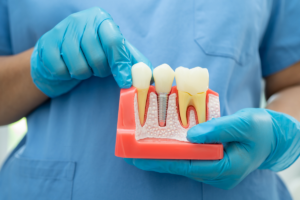
What Is Root Canal Treatment?
Inside each tooth is a space containing dental pulp, which includes nerves, blood vessels, and connective tissue. Deep decay, cracks, repeated dental treatment, or an injury can allow this tissue to become inflamed or infected.
During root canal treatment, the affected pulp is removed. The inside of the tooth is then cleaned, shaped, disinfected, filled, and sealed. The roots remain in place, allowing the natural tooth to continue functioning after it has been properly restored. This treatment helps reduce the risk of reinfection while preserving the remaining tooth structure.
Lance Family Dental provides root canal treatment in Festus using modern dental techniques. The exact treatment and restoration needed depend on the tooth’s condition.

What Is a Tooth Extraction?
A tooth extraction is the complete removal of a tooth from its socket. It may be recommended when a tooth is severely damaged, infected, fractured, or lacks enough gum and bone support to be predictably restored.
An extraction may also be used in other circumstances, such as preparing for certain orthodontic or denture treatments. This article focuses specifically on extractions involving damaged or infected teeth.
Lance Family Dental offers tooth extractions for teeth that are severely broken, infected, abscessed, or damaged beyond repair.
Removing a tooth addresses the immediate problem, but it also leaves a space. Depending on the tooth’s location and the patient’s needs, the dentist may discuss whether that space should later be restored.
When Can a Damaged Tooth Be Saved With a Root Canal?
Needing root canal treatment does not automatically mean that a tooth is beyond repair. Many infected teeth can remain functional after the infected tissue is removed and the tooth is properly restored.
Several factors help determine whether saving the tooth is realistic.
Enough Healthy Tooth Structure Remains
A tooth needs enough sound structure above and around the gumline to support a filling, crown, or another final restoration.
If decay or breakage has destroyed most of the visible tooth, there may not be enough structure to hold a restoration securely. The dentist must evaluate how much healthy enamel and dentin remain after damaged areas are removed.
The Root Is Not Severely Fractured
Some cracks affect only the upper portion of the tooth and can be treated with a crown, root canal, or combination of treatments. Other fractures extend deeply beneath the gum or vertically through the root.
A vertical root fracture can make a tooth difficult or impossible to restore predictably. The location and direction of the crack matter as much as its visible size.
The Tooth Has Adequate Bone and Gum Support
Even a technically successful root canal cannot compensate for a tooth that lacks sufficient periodontal support.
Advanced gum disease can weaken the tissues and bone supporting a tooth. Teeth with severe mobility or extensive bone loss may not provide a stable foundation for long-term restoration.
The Infection Can Be Accessed and Treated
The internal anatomy of every tooth is different. Root canals may be narrow, curved, calcified, or otherwise complex.
Many infections can be treated successfully, but unusual anatomy, previous treatment, or extensive infection can affect the recommended approach. In some situations, the dentist may recommend evaluation by an endodontist, a dentist who focuses on treating conditions inside the tooth.
The Tooth Can Be Restored After Treatment
Root canal treatment addresses the tissue inside the tooth. It does not rebuild missing enamel or repair a large fracture by itself.
After treatment, the tooth usually needs a permanent restoration to seal and protect it. Depending on its location and how much healthy structure remains, the final restoration may involve a filling or dental crown. A back tooth that absorbs significant chewing pressure often needs more protection than a tooth with minimal structural damage.
When Is an Extraction More Likely to Be Recommended?
An extraction may be the more appropriate choice when the tooth cannot be restored in a way that is expected to remain stable and functional.
Possible reasons include:
- A fracture extending deeply into or through the root
- Extensive decay below the gumline
- Too little healthy tooth structure to support a restoration
- Severe bone loss around the tooth
- Advanced mobility caused by periodontal disease
- An infection that cannot be predictably treated
- Repeated treatment failure combined with poor restorability
- Damage that would prevent the tooth from functioning comfortably
No single symptom can confirm that an extraction is necessary. Even a painful or badly broken tooth may have treatment options. Dental X-rays, clinical testing, and an examination are needed to understand the condition of the root, pulp, bone, and surrounding tissues.
Root Canal vs. Extraction: How Do the Treatment Processes Compare?
Both procedures are commonly performed with local anesthetic to help manage comfort. The steps afterward, however, are different.
Root Canal Treatment Process
Root canal treatment generally involves:
- Examining and testing the tooth
- Taking dental images when needed
- Numbing the treatment area
- Accessing the pulp chamber
- Removing inflamed or infected tissue
- Cleaning and shaping the canals
- Filling and sealing the internal space
- Restoring the tooth with a filling or crown
The treatment process depends on the tooth’s condition, internal anatomy, infection, treatment complexity, and the restoration needed afterward.
Tooth Extraction Process
An extraction generally involves:
- Examining the tooth and surrounding structures
- Reviewing dental images
- Numbing the area
- Loosening and removing the tooth
- Cleaning and evaluating the socket
- Providing instructions for healing and home care
Some extractions are straightforward, while others are more complex because of the tooth’s position, root shape, fracture pattern, or surrounding bone. Your dentist will explain what is expected based on your specific tooth.
What Happens After a Root Canal?
A root canal-treated tooth needs a secure final restoration. Until that restoration is complete, patients may be advised to avoid biting hard foods directly on the tooth.
The final filling or crown helps seal the tooth and protect its remaining structure. A crown may be particularly important when the tooth has a large filling, extensive decay, a fracture, or reduced strength.
Continue brushing and cleaning between your teeth as directed. Regular dental visits remain necessary because a root canal-treated tooth can still develop problems involving the restoration, surrounding gums, or supporting bone.
What Happens After an Extraction?
After an extraction, the socket needs time to heal. Patients should follow the dentist’s written instructions regarding cleaning, eating, physical activity, and managing the treatment area.
Contact the dental office if symptoms worsen rather than improve or if you have concerns about bleeding, swelling, discomfort, or healing.
Once the area has been evaluated, the dentist may discuss whether replacing the missing tooth is recommended. Options can include:
- A dental implant and crown
- A fixed dental bridge
- A partial or full denture
Not every space is treated in the same way. The recommendation depends on the tooth’s location, condition of neighboring teeth, bite, bone support, health history, and personal goals.
Does a Root Canal or Extraction Cost More?
There is no universal cost comparison. Fees vary according to the tooth being treated, treatment complexity, required imaging, final restoration, replacement needs, and individual insurance benefits.
A root canal commonly involves both treatment inside the tooth and a permanent restoration afterward. An extraction may have a different initial fee, but replacing the missing tooth can involve additional treatment.
Cost should be discussed after the dentist determines which options are clinically appropriate. Choosing solely by the initial fee may not account for future restorative needs, maintenance, or the effect of leaving the space untreated.
Signs That a Damaged Tooth Needs Prompt Evaluation
A tooth does not always need to hurt before it requires treatment. Some infections or cracks are discovered through an examination or dental X-ray.
Arrange a dental evaluation when you notice:
- Persistent or worsening tooth pain
- Sensitivity that lingers after hot or cold foods
- Pain when biting or chewing
- A visible crack or broken area
- Swelling near a tooth or along the gums
- A bump or drainage on the gum
- An unpleasant taste that returns
- Darkening of a tooth after an injury
- Facial swelling
- A loose permanent tooth
Untreated decay can progress from a cavity to pain, infection, and tooth loss. These symptoms may also have causes unrelated to the dental pulp, so an examination is needed before treatment is recommended.
Lance Family Dental makes every effort to see patients promptly when dental emergencies arise. Patients experiencing a toothache, abscess, cracked tooth, swelling, or another urgent concern can contact us for emergency dental care.
How a Dentist Decides Whether to Save or Remove the Tooth
The decision begins with a complete evaluation. Your dentist may:
- Ask when the symptoms began
- Examine the tooth and surrounding gums
- Check for cracks, decay, swelling, or mobility
- Test how the tooth responds to temperature or pressure
- Evaluate the way the teeth meet
- Review dental X-rays
- Consider previous restorations or treatment
- Assess whether the tooth can support a final restoration
The dentist should explain why the tooth is or is not considered restorable. You can ask what treatment would be needed to save it, what restoration would follow, and what alternatives are available.
When root canal treatment and extraction are both realistic options, the discussion should include the benefits, limitations, maintenance needs, and likely next steps associated with each one.
Choosing the Right Treatment for a Damaged Tooth
A painful, infected, or damaged tooth does not automatically need to be removed. Root canal treatment may preserve the natural tooth when the infection can be treated and enough healthy tooth structure, root support, gum tissue, and bone remain for a dependable restoration.
When a fracture extends deeply into the root, decay has destroyed too much of the tooth, or the supporting tissues are severely compromised, extraction may be the more appropriate treatment. A dental examination and appropriate imaging are necessary to determine whether the tooth can be saved and what restoration or replacement may be needed afterward.
Dr. Brad Lance and the Lance Family Dental team provide personalized restorative and emergency dental care in Festus, MO. Visit Lance Family Dental to request an evaluation and discuss the treatment options for your damaged tooth.
Frequently Asked Questions
Is it better to get a root canal or pull the tooth?
Saving the natural tooth is generally preferred when it can be predictably treated and restored. Extraction may be more appropriate when the tooth has extensive structural damage, a severe root fracture, inadequate bone support, or another condition that makes restoration unlikely to succeed.
Can every infected tooth be saved with a root canal?
No. Root canal treatment addresses infection inside the tooth, but the tooth must also have enough healthy structure and supporting bone. Severe fractures, decay below the gumline, or advanced periodontal damage may prevent successful restoration.
Does a root canal remove the tooth’s roots?
No. Root canal treatment removes inflamed or infected pulp from inside the tooth. The roots and outer tooth structure remain in place.
Will I need a crown after a root canal?
Many root canal-treated teeth need crowns, especially back teeth or teeth with significant structural damage. Some teeth may be restored differently. Your dentist will recommend the final restoration based on the location and condition of the tooth.
What happens if I have an extraction and do not replace the tooth?
The effects depend on the tooth’s location, bite, and surrounding teeth. In some cases, neighboring teeth can shift, or chewing function may change. Your dentist can explain whether replacement is recommended and which options fit your needs.