If your dentist recommends a crown, you may wonder whether it can be completed that day or will require another visit. Same-day crowns are designed and manufactured in the dental office. Traditional crowns are usually made by a dental laboratory and placed at a later appointment.
When comparing a same-day crown vs. traditional crown, consider the treatment process alongside your tooth’s needs. Both approaches can be appropriate, and neither is automatically better because of its speed or where it is made.
At Lance Family Dental, we use CEREC® technology for same-appointment crowns in suitable cases. We explain the available options so you understand why a particular approach is recommended.
What Does a Dental Crown Do?
A crown covers the visible portion of a prepared tooth to restore its shape and function. It may be recommended for a tooth with extensive damage, a large filling and limited remaining structure, or a fracture that can be restored.
Some teeth also need a crown after root canal therapy, depending on their location and condition.
Before discussing how to make the crown, the dentist determines whether the tooth can support it and whether another restoration would be appropriate.
How Does a Same-Day Crown Work?
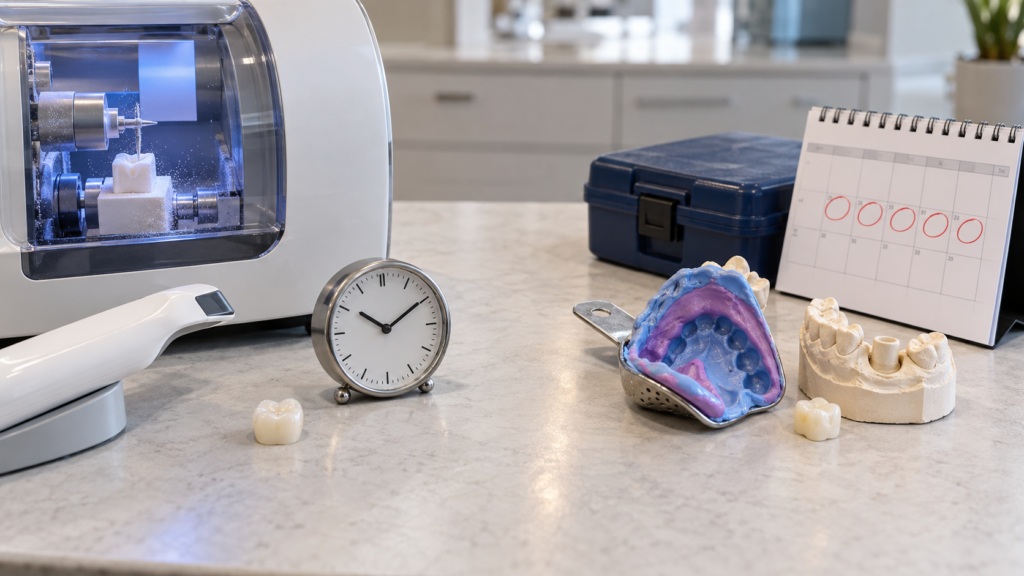
Our same-appointment crowns use a digital workflow to create the restoration in the office. A typical appointment includes:
- Evaluating and preparing the tooth. The dentist removes decay or damaged material as needed and shapes the tooth to make room for the crown.
- Taking a digital scan. An intraoral scanner records the prepared tooth, surrounding teeth, and bite.
- Designing the crown. Software helps create a custom restoration based on the scan and treatment plan.
- Manufacturing and finishing it. The crown is milled from a suitable material and finished according to that material’s requirements. Finishing may involve polishing or heat treatment.
- Checking and placing the crown. The dentist evaluates the fit, bite, contacts, shape, and appearance, makes necessary adjustments, and bonds or cements the crown.
When treatment is completed that day, a temporary crown and separate placement appointment are generally unnecessary.
“One appointment” does not mean every step happens instantly. Allow time for preparation, scanning, manufacturing, finishing, and adjustments. The office can explain the expected appointment length for your case.
How Does a Traditional Crown Work?
A traditional crown is usually fabricated by a dental laboratory. The word “traditional” describes the treatment arrangement; the laboratory may still use digital technology.
The process commonly involves:
- Preparing the tooth. The dentist shapes the tooth and addresses decay or damage as needed.
- Recording the tooth and bite. A physical impression or digital scan is sent to the laboratory with the dentist’s instructions.
- Placing a temporary crown. This protects the prepared tooth while the final restoration is made.
- Fabricating the final crown. The laboratory creates the restoration using the selected material and specifications.
- Returning for placement. The dentist removes the temporary crown and checks the final restoration before bonding or cementing it.
Laboratory turnaround and appointment scheduling affect the interval between visits. Ask what to expect and how to care for the temporary crown.
Same-Day Crown vs. Traditional Crown at a Glance
| Comparison | Same-day crown | Traditional crown |
| Appointments | Often one longer visit | Usually a preparation visit and a later placement visit |
| Impression method | Digital scan | Physical impression or digital scan |
| Manufacturing location | Dental office | Dental laboratory |
| Temporary crown | Usually unnecessary if completed that day | Commonly needed between visits |
| Materials | Options compatible with the office’s system and clinical needs | Options available through the selected laboratory |
| Customization | Digital design, finishing, and chairside adjustments | Design and finishing according to the dentist’s laboratory instructions |
| Suitability | Depends on the tooth and treatment plan | Depends on the tooth and treatment plan |
These are general patterns. Additional treatment or an unexpected finding can change the planned process.
Why Might Your Dentist Recommend One Approach?
Your Tooth and Bite
The amount of remaining tooth structure, the tooth’s location, gum health, and bite all influence treatment planning.
If a tooth needs additional care before it can be restored, the crown may not be completed immediately. “Same-day” refers to crown fabrication and placement in suitable cases, not a promise that every dental problem can be resolved in one visit.
Clenching or grinding also matters because it can place additional force on a restoration.
Materials and Appearance
Both workflows can create customized crowns. The appropriate choice depends on the material, design, shade requirements, and available manufacturing options.
Laboratory involvement may be useful for particular materials, detailed shade characterization, or coordinating several restorations. This does not mean every front tooth requires a laboratory crown or that a same-day crown cannot look natural.
Ask what the dentist recommends for your particular tooth and why.
Appointment Preferences
A same-day crown may help if arranging multiple visits is difficult. It can also avoid the temporary-crown stage when treatment is completed during that appointment.
However, the visit is generally longer than a preparation-only appointment. If longer appointments concern you, discuss that before scheduling.
Convenience is part of the decision, alongside the clinical requirements.
Are Same-Day Crowns as Durable as Traditional Crowns?
Durability depends on more than whether the crown was made in an office or laboratory. Material selection, fit, remaining tooth structure, bite forces, oral hygiene, and patient habits all matter.
Both approaches can provide long-term service when appropriately selected, placed, and maintained. That does not establish that every crown has the same strength or lifespan.
A crowned tooth can still develop decay near the crown’s edges. The crown or supporting tooth can also fracture, and a restoration may become loose.
Neither process eliminates the need for ongoing care. Your dentist can explain what affects your restoration’s expected service life, but cannot guarantee a fixed lifespan. Ask whether your bite or grinding habits require additional attention.
Questions to Ask Before Choosing a Crown
A useful discussion should explain both the recommendation and what you will experience. Consider asking:
- Is my tooth suitable for a same-day crown?
- Which material do you recommend, and why?
- Will I need a temporary crown?
- How many visits should I expect, and how long might they take?
- Do my bite or appearance goals affect the recommended process?
Tell the team about scheduling difficulties, previous experiences, or dental anxiety. Those concerns can be considered while keeping treatment focused on your tooth’s needs.
Caring for Your Crown
Brush twice daily with fluoride toothpaste, clean between your teeth daily, and attend recommended dental exams and cleanings.
Avoid chewing ice or using your teeth to open packages. If you clench or grind, ask your dentist whether a protective appliance is appropriate.
Follow the instructions for your temporary or final crown, including any guidance about eating after placement. Contact the office if the crown feels loose, the bite seems uneven, or you develop significant or worsening discomfort.
Some sensitivity may occur after treatment. Persistent symptoms deserve assessment rather than assuming they are part of normal recovery.
Frequently Asked Questions
Can every crown be completed in one visit?
No. The tooth’s condition, material requirements, and treatment complexity affect whether same-appointment care is appropriate. Additional treatment may also be needed before the crown can be placed.
Will I need a temporary crown with CEREC?
Usually not if the final crown is completed and placed that day. If treatment cannot be finished during the appointment, the dentist may recommend a temporary restoration.
Are traditional crowns always made from physical impressions?
No. A laboratory-made crown can be created from a digital scan. Digital scanning is not exclusive to same-day treatment.
Is a same-day crown less durable?
Not necessarily. Durability depends on the material, fit, supporting tooth, bite, and maintenance. The manufacturing location alone does not establish which crown will last longer.
Does crown preparation hurt?
The tooth is typically numbed before preparation. You may notice pressure or vibration, and sensitivity can occur afterward. Tell the dentist if you experience pain during treatment or concerning symptoms after the appointment.
Discuss Your Crown Options in Festus, MO
The right crown process starts with an evaluation of your tooth and a clear explanation of the available options.
At Lance Family Dental, we offer CEREC same-appointment crowns for appropriate cases and help you understand the recommended treatment plan. We can discuss appointment expectations, temporary restorations, and ongoing care without promising the same process for every patient.
Contact Lance Family Dental to schedule an evaluation and discuss which crown approach may be appropriate for you.